
Impact at a glance
- 5
- GDS assessments passed
- 88–90%
- User satisfaction
- +25%
- Project velocity
- −30%
- Rework
Incl. standalone accessibility
vs. 85% gov benchmark
Clearer handoff, fewer rework cycles
Early stakeholder buy-in
01 · The problem
Navigating high complexity
The OECD's Pillar 2 framework is one of the biggest shifts in global tax policy in a decade — a 15% minimum corporate tax rate for the largest multinationals on the planet. No blueprint, evolving policy, real money attached.
My job: lead the User-Centred Design team at HMRC building the digital service for it. Two problems on day one. Translate dense, mutating policy into something accessible. And unify a fragmented multidisciplinary team that didn't have the tools or rituals to succeed.
The process was disjointed. Teams in silos, low-fi components, static screenshots, no shared visual language. Figma was off-limits. A content designer couldn't see their own work in context. Morale and velocity were both down.
02 · The move
Building a Figma-like experience inside Mural
I built a complete high-fidelity GDS component library from scratch — inside Mural. Not a static kit. Real components with happy and unhappy path states, the things a real service needs.
The library became a single source of truth across multiple agile teams. Designers, researchers and content specialists co-created visually in real time. Stakeholder demos turned from static slides into live co-design sessions — rapport went up, revision cycles dropped.
It earned that 'source of truth' status by being better than what came before. Not by mandate.
03 · The team
Build people to build great products
Look after the team, the team delivers exceptional work. That's the whole philosophy. Psychological safety as a baseline, not a perk. Approachable, present, actively mentoring every member.
I personally trained the team in interaction design principles. For some, I taught the basics of coding with the GDS Prototype Kit so they could ship clickable demos themselves — full ownership of an idea from concept to working prototype, no bottleneck through a single specialist.
It broke down discipline-specific barriers and produced a team of versatile, confident designers who could defend their ideas in any room.
04 · The legacy
A transformed team and a lasting cultural shift
What I'm proudest of isn't the product. It's that the Mural design system is now officially owned by the Pillar 2 team and actively used and enhanced by the wider UCD community at HMRC. It sparked a way of working that outlasted my involvement.
We went from a collection of individuals to a cohesive, high-performing UCD team. ~25% increase in project velocity, ~30% reduction in rework, five GDS assessments passed including a standalone accessibility review. 88–90% user satisfaction against the 85% government benchmark.
By focusing on people and process, we didn't just navigate a highly complex project — we built a stronger, more capable design culture behind it.
“If we couldn't use Figma, I'd bring a Figma-like experience to the tools we did have.”
Inside the work
The system in practice
Four artefacts from inside the work — the master board, the index that made it navigable, and the in-person sessions that kept the team aligned.
 A
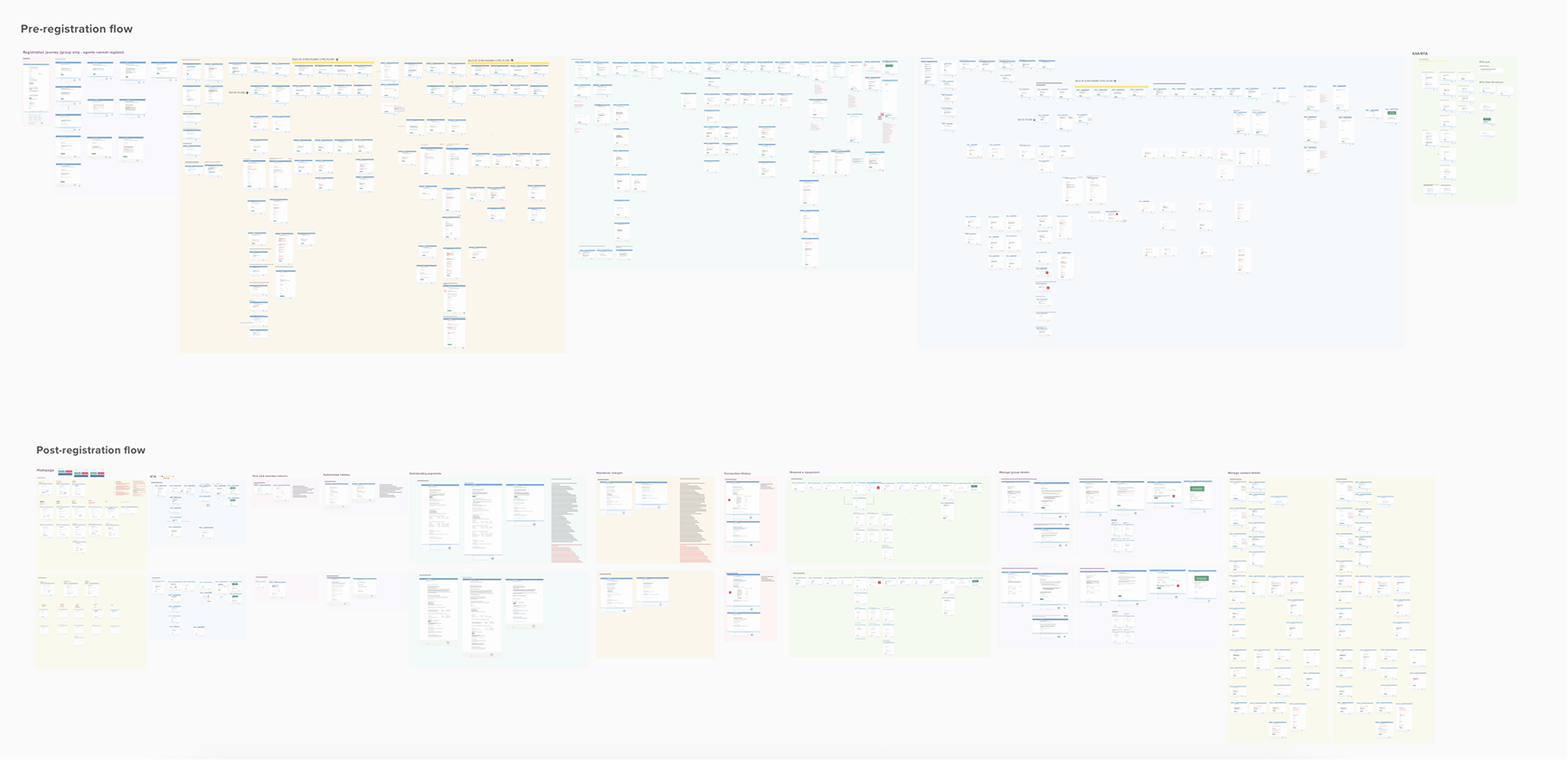
AMaster Mural board
The master board I set up for the UCD team to work async. Used as the source of truth for internal teams, external teams and stakeholders.
 B
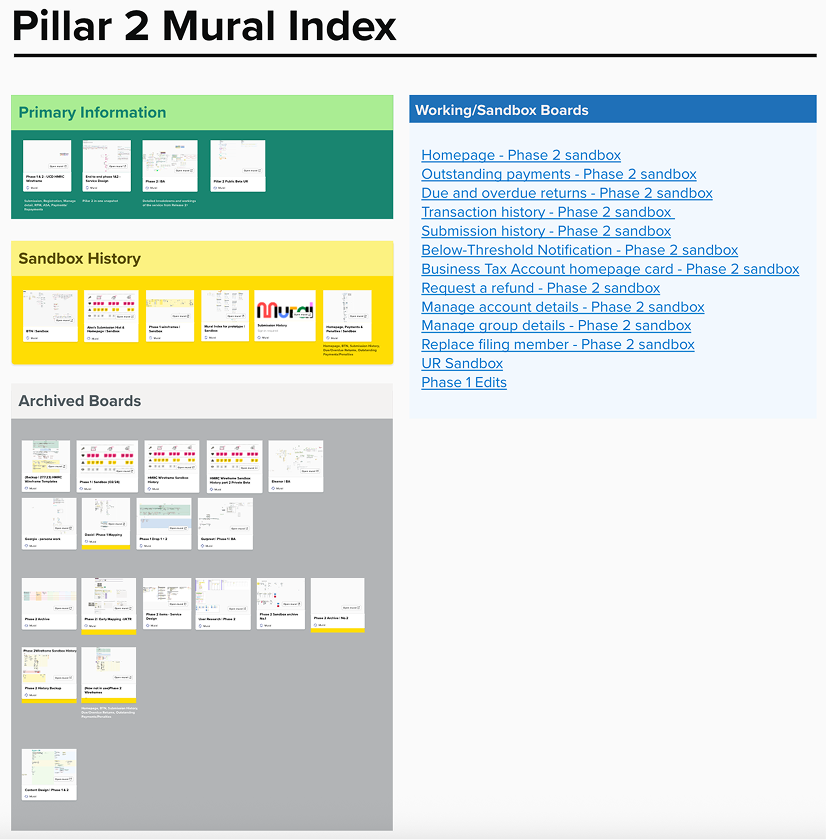
BThe index that made it navigable
Mural was our wireframe and mapping tool because of the Figma restriction. Boards stacked up fast. I built an index so the team could jump between them and track what's been made and by whom.
 C
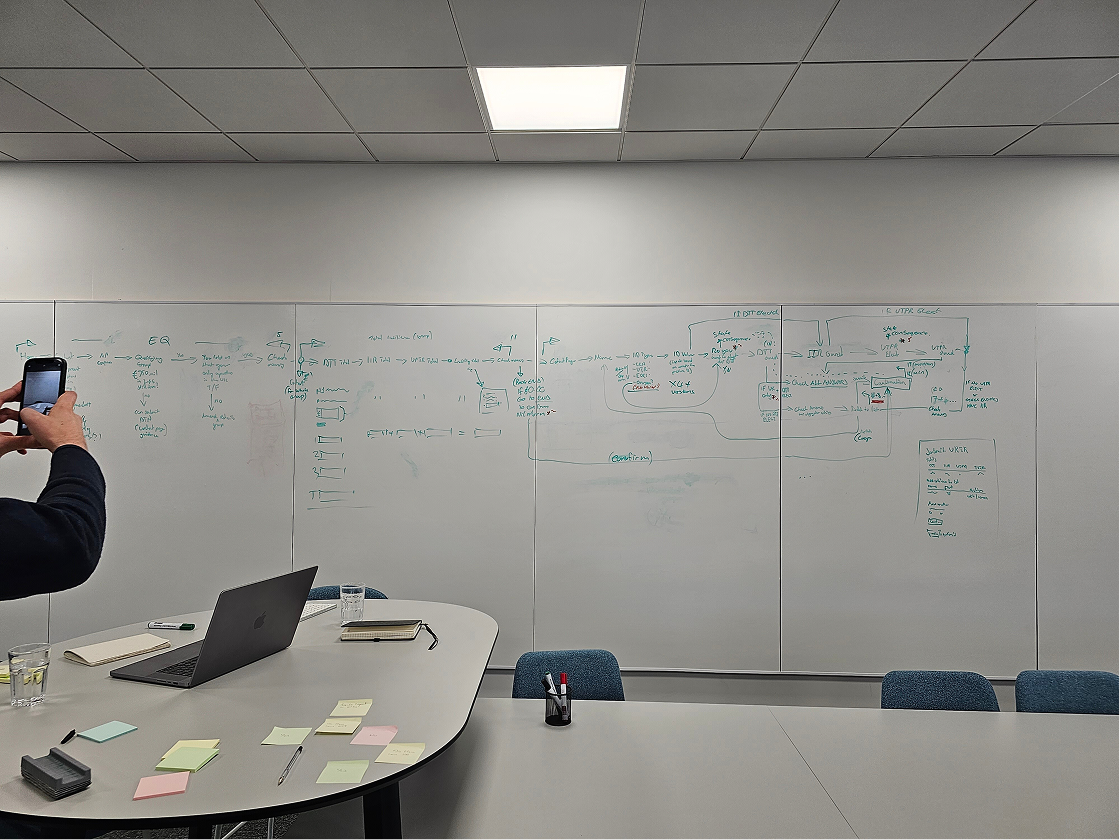
CComing together to unblock
A lot of the work was remote, but I made sure we came together to map out problems — product and team. Sometimes 1-2-1, sometimes a collective session. This is one of those, unblocking a user journey.
 D
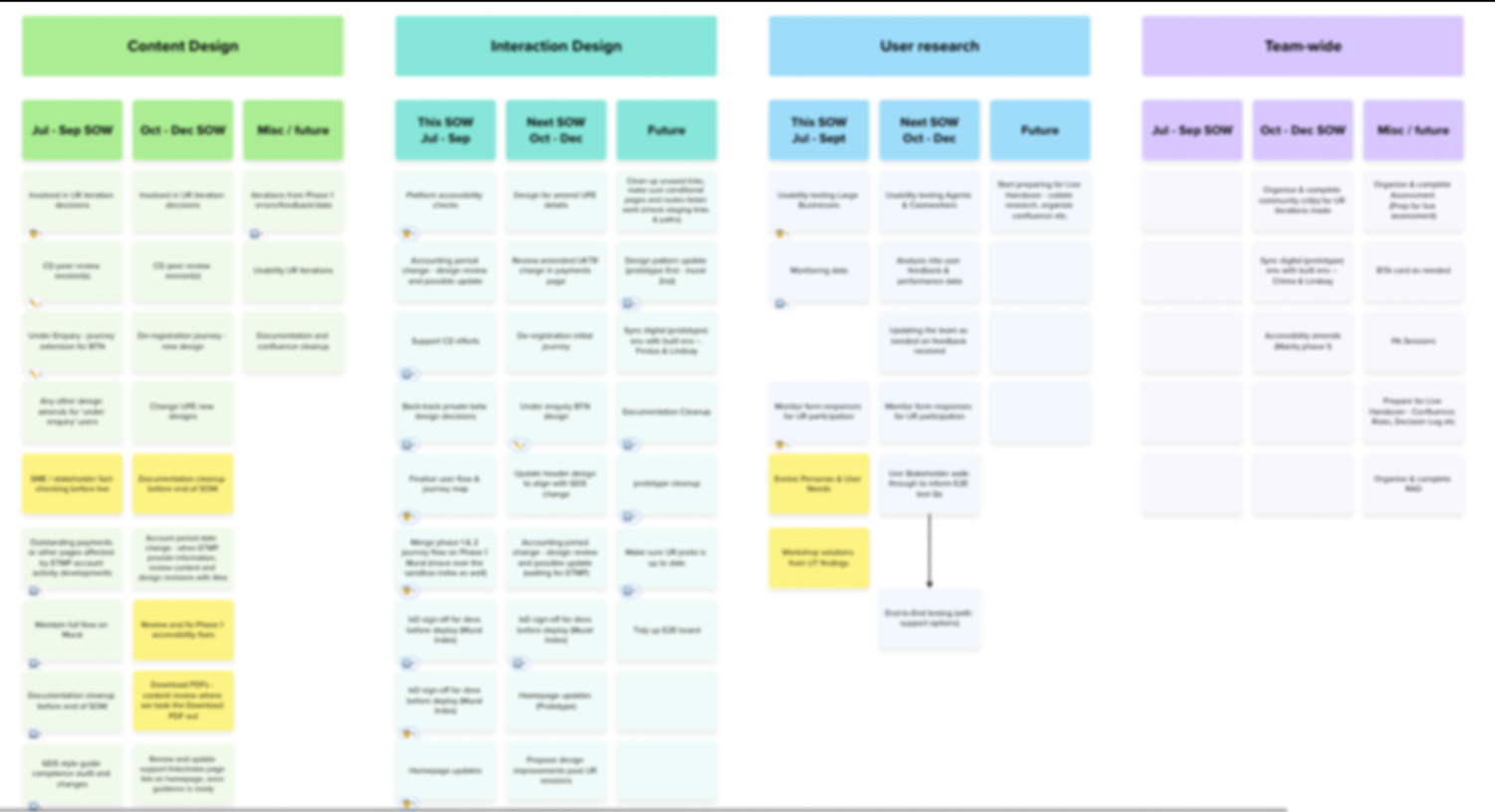
DPlanning the work ahead
Forward planning across content, interaction, research and team-wide work. Prevents sporadic ROI-negative work and stops other teams stealing unnecessary time from us. When you know what's coming, you focus better on the present.
Next project
One Utility Bill
Consumer · Brand & product